
JON HEWITT INTERVIEW by Andrew Leavold 16/11/11
A mutual friend, Jack Sargeant, regularly quotes Japanese photographer Araki: "Cities need zones of obscenity to make things interesting."
 The same can be said for filmmaking. Danger, violent conflict, the extremes of human experience and behaviour, these are the mainstays of drama, not to mention the voyeuristic urge to witness the forbidden. Few Australian filmmakers dare to go to those dark places, and yet director Jon Hewitt has lived amongst the shadows for his entire career. From helming the low to no-budget genre productions Bloodlust (1992) and Redball (1999), Hewitt graduated above-ground with Acolytes (2008), a $4 million horror thriller pitting three high school fuckups against devious backpacker murderer Joel Edgerton.
With X (2011), Hewitt has fashioned a dark love letter to his home town, a veritable "zone of obscenity" in any culture. Set over one night, X is the tale of two prostitutes chased through Sydney's Kings Cross by corrupt cops, knife-wielding pimps, drug dealers and other creatures of the night. The second in Hewitt's 'Kings Cross Trilogy' after the guerrilla romance Darklovestory (2006) and made on a quarter of Acolyte's budget, X is a remarkable achievement: equal parts art film and exploitation as well as style and substance, with rapid-fire, split-screen editing and stunning photography. It's a mythic descent into a Hades-like world of perpetual darkness, and Hewitt's cameras capture its sense of time and location to perfection.
 Andrew: I heard a mutual friend of ours, Jack Sargeant, talk about this on the weekend: "The Japanese photographer Araki once said cities needed zones of obscenity to make things interesting."
Jon: You mean like red light districts and shit like that where anything goes? Hopefully every decent city's got one, and certainly the Cross is the most resonant of those sorts of districts in Australia anyhow.
Andrew: You and Belinda now live near King's Cross - what does a place like this represent to you?
Jon: We've lived here since 2000. We live in Kings Cross - I'm in the lounge room of my apartment, I'm just walking over to the window. Just to tell you where we are - we're on the fifth floor of an apartment building right on the strip. McDonalds is next door, and we're in between Porkys and Showgirls, just across the road from Strippers. I'm looking out the window right now at two hookers plying their trade. So this is where we live (laughs). We've lived here since 2000 and seriously you can't really live here 24/7 without it becoming part of your fucking psyche. So pretty much everything Belinda and I have done since we've lived here has been influenced by what we see on the street. We've written a couple of scripts that have actually been made, like Darklovestory (2006) and X (2011), set absolutely in Kings Cross. We've written a couple of scripts for Hollywood, there's one set in New York subways, but a lot of that resonates with Kings Cross as well. It's almost impossible to escape some of the shit you see!
 Andrew: How would you describe the mythos of the Cross to someone who's never experienced the place?
Jon: The one constant thing that the Cross offers - I'm a bit of a tin-pot historian since I've been living here - and I've spoken to people who have lived here for sixty years and six years and everything in between, and the one thing they always say is the Cross is constantly changing, it's never the same, and certainly in the twelve years we've lived here, it's gone through about three different transformations in that now on a Saturday night at 3 o'clock in the morning there'll be thousands of trashed young people here, well-off, well-dressed, beautiful young girls and guys, because 24 hour liquor trading has made it a club central. Whereas ten years ago at the same time it would have been full of bogan guys from the suburbs looking to get laid, and sailors, people who were staying in all the hotels here. But there are hardly any hotels in the Cross now, they are all apartment buildings. So there's been a degree of gentrification. But the strip where we live, we live on the last of the old Kings Cross, which is about 150 metres of Darlinghurst Road that's still got junkies and hookers and strip clubs, but there's also really groovy bars where they wouldn't even fucking let you in! The Cross is a fascinating place because it's this incredible 24 hour a day melting pot where you can pretty much see everything. I guess I get used to girls saying, "Do you wanna fuck?" when you're walking out your front door and stuff like that, but it can be intimidating to some people. I guess there are already a few things, people are going "Oh, you make these stories, and they're so dark, why are you so interested…?" One of my standard answers is that in 2009, within 150 metres of our front door, of the place where we live, there were five separate gun shot incidents. Including the famous "Chk Chk Boom" girl, she was an internet sensation for half a minute? Well that happened literally directly across the road from our house! I could look out the front window and see that going on. So when people from the suburbs go, "Why are you interested in dark shit?", I guess I have to say because of THAT. Apart from I'm naturally drawn to those sorts of stories. I've got this Youtube channel that I've had for about seven years called Stations Of The X, and it's full of interviews and anything to do with Kings Cross. There's about 220 separate videos there now. The myth of the Cross, what really interests me - it's one of the few places in the world that actually has a body of pulp fiction written about it. In the Sixties and Seventies Horwitz Press published 75 or 80 pulp novels - Bad Boy Kings Cross, Stuck Up The Cross, Kings Cross Junkie…
Andrew: Melbourne had that with St Kilda to a point, but that doesn't exist in the same way.
Jon: Not any more. I used to have an office in Green St in St Kilda, which is just off Gray St, in the 80s. But St Kilda was never out there like Kings Cross. Sure there are still hookers on the streets down there, but down here it was always so flamboyant and so fucking in your face. It's a little less in your face now, but some nights it can still be pretty incredible. Kings Cross is our Montmartre or our Reeperbahn or Times Square. And the interesting thing about it is, it works on a sort of mythological level or a metaphysical level in that it literally doesn't exist as a post code. It's the confluence of those five suburbs - Darlinghurst, Potts Point, Elizabeth Bay, Woolloomooloo, East Sydney. The train station is called Kings Cross, and everybody knows the place is Kings Cross, but you can't have an address that says "Kings Cross". It's just this interesting place that has those resonances, that's another reason why we set films here. They feel universal. You feel somehow stories for the whole world instead of just stories about Australia.
Andrew: You've said X is the second in a proposed "King's Cross trilogy" after Darklovestory - where do you go from X?
 Jon: Darklovestory was the first film, which was like a dialectical fairy tale about storytelling wrapped in a crime thriller - an edgy, experimental, underground film that was sort of like a romance drama about a black guy and a white woman, played by Aaron Pedersen and Belinda McClory, and just trying to be in love while the world around them is trying to tear them apart. So it was sorta edgy and wacked out, it was like a modern Grimm's fairy tale. Whereas X is the middle one of the trilogy, which is a much more straight-ahead, mainstreamy type thriller about a couple of gorgeous women who go through the night from Hell. But the third one would be the edgiest of the lot, it's called Five Hits and it's about five junkies going to score. It's told in real time, so that there are five separate stories, and they all end up in this terrace house at the same time and the shit hits the fan. So there are five separate stories, all told in real time, and then there's a bookend, a top and a tail. My idea is that I do the top and the tail, and then the five stories would be directed by five different people - interesting young filmmakers, or friends, or anybody - and I have these strict rules where they have to shoot their ten or fifteen minute story in a take, or an afternoon. So it's got this whole real time vibe going on. Maybe that'll happen. But the idea was to have three radically different films narratively, production value, in every sense, but somehow happen at the same time, that told very similar stories. 'Cause it's my whole dialectical thing where there are many ways to tell the same story and you get all information on the same page. That was the idea.
Andrew: That kind of filmmaking doesn't happen enough in Australia.
Jon: You just have to force it into being, making three films about the same sort of thing… Obviously Darklovestory was made completely in the underground, and that's how that film even got made, and it's still not properly finished - I haven't been able to raise the money to deliver it, pay off the cast and crew and make it a releasable film. That's why it's not out on DVD. It's only screened at selected film festivals. It's a pretty cool film, I'm really happy with it, but I need to raise about $400,000 to properly deliver it. Which I can still do, because it hasn't really dated. X is the "legitimate" film of the Cross, and maybe on the back of X I might be able to get Five Hits financed, but as a lower budgeted and very freewheeling thing, and give some opportunities to some other interesting filmmakers.
 Andrew: So it's still a struggle after twenty years to get the financing?
Jon: Oh yeah, I think no matter who you are it's always a bit of a struggle. Certainly for me, I mean X is my fifth feature film, but it's only the second one I got paid to make. I made Acolytes in 2008, I was 48 years old when I directed that film, and I'd already made three previous features, but that was the first film where I actually got a fee to make it. I've never even considered myself as having had a career in the film industry (laughs), but I've been lucky enough certainly in the last five years to have made two feature films, and you can have a living doing that. And I've written a few scripts for other people here and there. So I think I'm incredibly lucky, but it's obviously going to be just as hard for me to get my next film financed. I guess my films are always a little out there. If I'm going to make the film myself, then I may as well do something worthwhile, and try to do some sort of edgy story that nobody else is telling. Don't get me wrong, I'd be absolutely thrilled for somebody to say, "Do you wanna direct Alien 7?" Just show me where to go!
Andrew: It seems like for twenty years you've shifted comfortably between low-budget genre pictures, and no-budget guerrilla projects. Where is the ideal place for you to be as a filmmaker?
Jon: I know how to do both, and I reckon I'd be pretty adept at directing the $100 million film as well. But I certainly know how to do it the hard way, and it's not a great way to make films, I've got to say. X was a terrific experience - it cost a million bucks which is a shitload of dough, but for the film that it is, it's still not a massive amount of money. You can just DO things when you've got a little bit of money that you can't do when you've got no money. You can at least go, "I can force this through to the end and I can give it a grade and I can actually deliver the fucker and it's going to be great." Whereas when you roll the dice on a movie like Redball (1999) or Darklovestory, obviously I was able to really deliver Redball to raise some money, but Darklovestory I still haven't, so I've got a cut of the film that's ungraded and no sound mix and all that sort of stuff, but it still hangs together pretty well.
Andrew: It's MUFF friendly but not necessarily MIFF friendly?
Jon: Absolutely, that's a great way of putting it. Maybe in ten years time, if I've made a few more films, people will go, "Oh, what's this lost gem? Why didn't we think this was any good ten years ago?" (laughs) Because it's a cool film. Jack played it. People who "know" can see that these sorts of films are cool, and legitimate. But it's much nicer making a film with money in the bank until you turn over.
 Andrew: I guess with a million bucks you can make a film like X look really amazing - we should mention Mark Pugh's stunning cinematography and the rapid-fire, split-screen editing of Cindi Clarkson.
Jon: Mark's a genius, and it's the third film we've made together. I don't know, we've just got this shorthand way of working where we can work really quickly. I mean we had to, it was only a twenty day shoot, and as you know, X isn't two people in a room talking for half the time, it's very location driven and there's eighteen different cast, it's all at night… So it was pretty brutal, we had to really go like the fucking clappers shooting that film. With Mark, it's a happy confluence of technology finally being there, we could actually get out on the streets of Kings Cross with no light, or shoot in available light, in Cinemascope, and get an awesome-looking picture. You couldn't do that five years ago, but you can do that now with camera and lens technology, it's just fucking great. And it's cheap! We shot on the Red, and it's an incredible camera, but the camera we shot on is already ancient history. Mark's already got the new version, the Epic, which is half the price and twice as good! Incredible. It's still hard to make a good movie, but I just love the way technology is continuing to advance.
Andrew: If you're shooting on HD, what are your ideal working conditions on a set?
Jon: I've experienced more cast than crew, I've also experienced fifty crew all looking at me going "what are we doing?" with trucks for miles and all that sort of shit… I like smaller crews that are respectful of the process. Films are still made in the way that they were made forty years ago when you literally did need ten HMIs, it needed five guys each to run, and generators and stuff, just to get an image on celluloid. Whereas you don't need that shit anymore, but people are still doing it, there are still these massive fucking gaffer and grip trucks, and then the whole shit becomes about the trucks and travel time and all that sort of stuff. I don't like that. For me it's what happens between the actor and the lens, that's the most important thing, and anything that gets in the way of that, I'm not into. So I like working with small crews, and being really mobile. Obviously I've had to as well - I think there's a way of working where you don't need thirty or forty people on set, even if you're making a huge film, you can still have only ten or fifteen.
 Andrew: It would be liberating, not having all that dead weight hanging off you when you're trying to get your shot.
Jon: Yeah. And basically, it's like a self-perpetuating monster, like you end up having extra crew to look after the crew, you know what I mean? So you have a third and a fourth AD just to make sure that the massive crew is somehow working properly. Certainly a film like X, we couldn't have it but we didn't really need it, and we couldn't have made it with a logistic like that anyhow. When we were shooting in the Cross in 2010, they were shooting Sleeping Beauty around here as well, and I can remember them locking down streets and there's like ten trucks, whereas we had our production office in the Cross and ten of us walked down the block to our set - that's the way to do it, it was fucking great.
Andrew: What's your reaction to the recent wave of glamorous junkie romances?
Jon: Like Candy (2006)? I dunno…I just judge each film on its merits, pretty much. I've seen some awesome films that have been about tragic junkies and romance, and I'd love to make one one day.
Andrew: The junkie scene is the complete antithesis of other cliched junkie romances - what I found most interesting is watching Billie Rose Prichard's face and seeing the seething maelstrom of emotions churning away on her character's face. To me that said so much more about the reality of heroin.
Jon: Obviously as a filmmaker I'm more drawn to junky films like Pure Shit (1975) than Candy. Pure Shit is the film for me, whereas Candy is just another movie about people. And obviously the junky scene was hugely influenced by the Bert Deling film. That was our Pure Shit gesture. Everything's so pussy-assed now - you can't show sex, you can't show naked people or people hitting up, it all gets fucking weeded out of the scripts. I haven't got an idea now, but do you actually ever see a needle going into flesh in Candy? Everything is homogenized or it happens off-screen, people have sex and then get out of bed with their underwear on. You just don't buy it. One of the reasons I wanted to do certain things - and people have gone, look at the old perve, it's totally exploitive and prurient - women standing there with shaved pussies completely naked, and guys with their dicks hanging out, and people pushing needles into their skin. I just wanted to shoot it because nobody fucking does it anymore, apart from anything else. I was saying to someone the other day, could you make Last Tango In Paris (1972) in 2012? I don't think anybody would let you. At least in the Seventies and Eighties, people used to go there, whereas most of the time, except for a very small number of films, people just don't even go there anymore.
 Andrew: Films now thrive on the idea of danger rather than the danger itself.
Jon: There's a lot of stuff withheld. Cinema is about seeing stuff, for me, it's about looking and seeing. Whereas now you get really smart and influential people saying words like "voyeurism" and it's a pejorative term, it's a criticism! For me it's an adjective - yeah, films are voyeuristic, of course they fucking are! We're looking at something - what are you talking about?
Andrew: Films in the Seventies celebrated the act of voyeurism.
Jon: All the films I like walk the razor edge of ideas or ideology. So people are maybe sometimes confused about where you're coming from - is this an exploitation film or is this an art film? Certainly on X there's been a bit of confusion, like in the international festival circuit where I was a little disappointed that we didn't score a huge festival berth outside of Australia, and it was always the same thing, it's too arty for the genre festivals but a bit too genre for the arty festivals, so you're stuck in between. Whereas I'm going, "Fuck that, I don't want to be either or, I want to make a crazy-assed thing that's somehow in the middle!" It's marrying strong genre tropes with something a bit more ambitious. I think that's what makes my films maybe different from most things. But that's my ambition. I love horror and sexploitation and violence, I just love watching movies like that. They're the sort of films I want to make, but I also want to give it something else. That's my schtick as a filmmaker. The people I love are probably obvious - I love von Trier and Gaspar Noe, Abel Ferrara. Nobody would accuse Lars von Trier of being a genre filmmaker, but Antichrist (2009) is a horror film and Melancholia (2011) is like an apocalypse film! It's his Armageddon!
Andrew: And all three names you just mentioned are all first class troublemakers…
Jon: You end up being that way because people go, "Jesus, you can't have people having sex, and what are you, some kind of perve, or are you trying to offend people?" There are certainly those elements to whatever you do. If you turn a camera on a naked person, you can't say that the thrill of looking at naked flesh isn't part of what's going on?
 Andrew: Speaking of other troublemakers, you mentioned Bert Deling, and I guess another nod to Pure Shit is that X is set almost entirely over one night, and both films have that mythic journey in and out of a subterranean world of darkness. It's very Greek, if you want to be overly academic about it…
Jon: Absolutely. It's great to be overly academic, because that's exactly what's going on. Pure Shit is incredibly rich subtextually, and I'd like to think X is as well, but on the surface it's still this full-on, exciting movie that you'd want to watch as a filmgoer. But it can be more than that if you want it to be. Pure Shit is a huge influence, like the way it captured the inner suburbs of Melbourne in the mid Seventies, I wanted to capture Kings Cross now, before it all disappears. The sense of place was really important to me.
Andrew: The Pure Shit connection probably explains why you wanted Phil Motherwell in Bloodlust (1992) playing the demented preacher.
Jon: Phil was also in Redball, he was the crazy-assed bookseller. He was actually playing Richard Wolstencroft - that scene in Redball is a verbatim scene of what happened to Richard when he was running the Hellfire Emporium! The Vice Squad cops came in and read him the riot act… Phil's an awesome actor as well, I'd cast him in everything if I could.
Andrew: Out of interest, where is he at the moment?
Jon: He'd be in Melbourne somewhere - he's got to be in his late fifties, early sixties now. I'm sure he's still alive (laughs) and I would have heard if something had've happened to him. He's a writer, he writes a lot of plays and stories and stuff like that. He's an incredible writer - maybe he's doing that sort thing, writing his autobiography, 'cause he's definitely got some stories to tell. Fuckin' hell, he's had an incredible life!
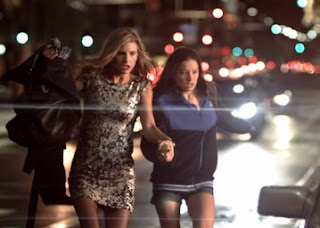 Andrew: Central to X is that almost mother-daughter bonding between Holly and Shay, both of whom have lost their mothers, both are self-described survivors, and to a certain extent they do.
Jon: One thing that Belinda and I tried to do all the way through the development of the script, we had a lot of pressure NOT to do this, was to rely on resonance across characters and across experience. If I could explain that a bit better: at script stage there was always people going, "Well we know who Shay is, we know her back story, but we don't really know who Holly is, and where does she come from, can we have a flashback," and we were always going, "If you want to know where Holly comes from, and who she is and what her experience was as a young woman, she's Shay." Shay's experience is what she went through ten years ago, and she was saved by that Katherine woman, the older woman. That continuity of experience, and that's how you figure out the richness of the character, it's just not explained to you. You know, it's the sort of shit you go through when you develop a script.
Andrew: It wouldn't be the same film without that relationship.
Jon: Oh no. Belinda and I wanted the film to have real emotional weight, and that was found in those sorts of primal relationships between people, mother-daughter… I think people can really emotionally respond to that sort of shit, even when they don't know that they're doing it. And that's the other reason why Holly - that's a spoiler, obviously - dies at the end. We used to have a happy ending to the film where Holly gets on the plane with a bag full of diamonds, Shay's got the other half. But that was more driven by my fantasy of making X2, and starting with Holly getting off the plane at Charles de Gaulle Airport, and we go from there. We decided that we wanted to do something in the final minute of the film that would really emotionally affect the audience hopefully, and that still made sense and didn't betray the characters. For me, X is ultimately about changing your life, the most common human experience. People call it mid-life crises, you quit a job or you leave a city, you get out of a relationship or whatever, that urge to change your life and do something better is so common, and that's sorta what X is about. It's not really about prostitutes and hooking, that's just the fabric of the story. Belinda and I wanted to show how liberating it can be, that effort to change your life, but also how potentially annihilating it can be as well. I think it's the hardest thing that people ever do, is really taking the plunge, to break free of whatever.
Andrew: Then of course, one character's annihilation is another's redemption.
Jon: There's all that sort of primal resonances and Greek tragedy going on (laughs).
 Andrew: The backdrop is still hookers and vice, and there are definitely shades of Redball in the corrupt cops and seedy underbelly of a city - as an outside observer, what are the differences between Melbourne's underworld and Sydney's?
Jon: Sydney's underworld is possibly a little bit like Sydney itself - it's more surface, it's more into the glamour. Melbourne has the potential to be a much darker, much more deeply nasty place. In the Seventies, Roger Rogerson swaggering around the Cross fucking killing people in broad daylight, he was a rock star! Whereas in Melbourne, that shit was going on but nobody knew about it. I think that's the difference - Sydney celebrates its criminal culture. Melbourne does as well, but not as much. In Sydney everybody's Chopper Reid, whereas in Melbourne only Chopper is Chopper Reid. The real crooks in Melbourne, nobody's ever heard of; they've never been inside a police station.
Andrew: And they never will! You were talking about categories before, and Acolytes very definitely sits in the horror category, and was a hit on the international circuit - what kind of signal does that send to Australian funding bodies and private investors?
Jon: I think maybe now it's a little easier to make a broader range of film or tell a broader range of stories in Australia than it was ten years ago. People would look at you across the table and go, "That's a genre script," and that meant NO, fuck off, we don't do genre. Whereas now, nobody would say that. And in fact there's this idea that perhaps genre is a smart way to go, as legitimate a way to go as a deeply-felt personal story.
 Andrew: The "genre" tag may make a film more exportable?
Jon: Definitely more exportable and more marketable internationally. I think it's just as hard as it's ever been to make films that connect with an audience. There's no real recipe. I can only speak for myself, and what I want to do is continue to tell interesting stories that have a very strong genre backbone, that enable me to find a worldwide audience for the film, but at the same time be ambitious in what the film is about or how it resonates subtextually or whatever, cinematically. And made for a sensible budget, where there's maybe a chance that the end product justified itself just in pure economic terms. The sad fact is that the world doesn't want Australian films. Not really. And if you approached making movies in Australia as a cold, hard economic business, nobody would ever make anything. You'd just leave it to Hollywood. Obviously we're not going to do that, there are all these other things going on, so we're always going to need some sort of subsidy and some sort of value judgment. I'm not saying we shouldn't be making films here! But my path is to try and be a little more sensible in pure movies-as-product terms. I can't help not thinking like that, I come from exhibition and distribution, I always had the posters for my films before the scripts… I'm always thinking about how to find an audience. Films only exist when somebody's watching them. It may be even harder now to find an audience.
Andrew: There's so much stuff out there I guess…
Jon: So much stuff, but it's a whole other world now, just getting a respectful theatrical release of any film I getting harder and harder - any film that's not a tentpole arthouse film or a tentpole Hollywood film. It's just harder. That's the realities of theatrical. But luckily theatrical is only one tiny part of the life of what you do. Even though, certainly in Australia, everybody's so fucking obsessed with the theatrical life of what you do. Unfortunately, 95% of everything that we do will not be that successful theatrically in Australia. Hollywood won the war fifty years ago, but they've really shut the gate in the last decade. And that's cool. But there are other platforms, other avenues. X has already been substantially successful internationally - that was our other strategy. We only delivered the film in February. Some people seem to think the film's been around for ever! What Lizzette [Atkins, co-producer] and I wanted to do was to give the film an international profile before we released it in Australia. Mainly because we knew that we'd never have the P&A to make a big deal of it, so we had to do it in that free way which is get it released in America and other countries, so that if you do a Google search the first fifty pages are all about the movie and there are other reviews… you get that international imprint, and that was all part of the strategy.
Andrew: I guess it takes imagination and inspiration to try to think of new ways to rattle the tin and be in exploitation in the 21st Century?
Jon: That sounds like a smart comment to me! (laughs)


 For Part One, it was really [from] stories I read about the Second World War and all the notorious Nazi doctors. When I wrote the script I kept thinking about those surgeons, because they were so crazy. So for me the most dark and scary things that could happen to human beings - intelligent surgeons cutting you open - they are really disturbing people. So that was really the basic idea for the Dr Heiter character. Each time, when I write a script, I have something in mind with what's lingering in the back of my head.
 The internationalist approach to the production, with a Japanese actor, German actors etc - I can only imagine the money is coming from various countries?
 I wondered to what degree the Japanese character was included for economic reasons or for narrative reasons.
 Of course, the ability to reduce the hook down to just three words - ass-to-mouth - automatically you get a mental image that's impossible to shake! The most perceptive review I've found, in my opinion, said the characters seem to exist in a limbo between living and dead, where death would be the most preferable option. I haven't seen a scenario as bleak as this since Salo.
 In Holland at the test screening, a couple of girls left the theatre and they were afraid to talk or even look at me! They thought I was such a disturbing man. I said it's all make-believe, the psycho killer. But the reaction is so strong. And on Facebook, the fan page they made of me, people want to sterilize me, shoot me, send terrorists after me - some people are so incredibly angry at the film.
 If you weren't going to make the third film in the sequence, what would you imagine as your follow-up?


